
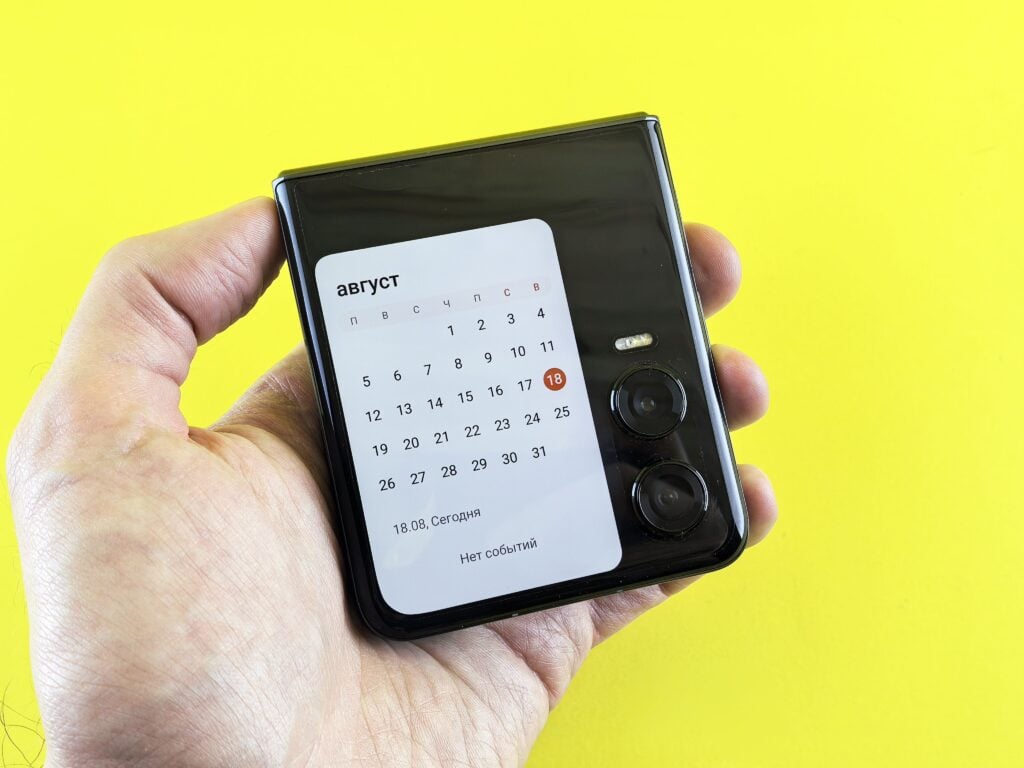
September’s keynote won’t change what’s on sale in Singapore. Apple is scheduled to begin its presentation at 1:00 AM SGT on September 10. Severe memory chip shortages are reportedly delaying local availability of the foldable iPhone until late 2026, likely two to three months after the U.S. debut.
There’s a basic complication, too: Apple hasn’t confirmed the product’s name. “iPhone Fold” remains unofficial, and no units have appeared on Orchard Road shelves.
Hold off on that upgrade. Even if Apple unveils its foldable iPhone at the upcoming keynote, Singapore likely won’t get it this September. Supply chain bottlenecks, combined with a phased rollout, could push local availability to late 2026.
Check out our site RWM on the latest update!
Check out our latest buyback prices HERE.
Photo by Andrey Matveev on Pexels
Is the Foldable iPhone Actually Launching in Singapore This September?
Keep September 10, 2026, at 1:00 AM SGT on your calendar, but don’t open your wallet yet. The keynote is real. A foldable iPhone ready for immediate purchase in Singapore is not.
Start with what Apple has actually announced
“Foldable iPhone,” “iPhone Ultra,” and “iPhone Fold” are not products you can buy today. They’re placeholder names attached to an unannounced device, while Apple’s current flagship remains the iPhone 17 series. Until Tim Cook steps on stage, any claim that the phone is already in stock is speculation, not a store update.
Check out latest iPhone 16 prices.
A keynote announcement doesn’t put phones in Singapore overnight
Apple could unveil the device on September 9 and still leave Singaporeans waiting instead of queuing at Orchard Road stores the next morning. The supply chain may be the sticking point. Reports describe severe constraints caused by the global memory chip shortage, a problem that could slow mass production and make a simultaneous worldwide rollout unrealistic for this hardware category.
Expect the U.S. before Singapore
Apple’s history points toward a phased release. Early shipments will likely head to the U.S., where the company can contain initial demand and put the hardware’s durability through real-world testing. Singapore might then wait another two to three months after the announcement.
In that case, local availability could move into late 2026 rather than arrive during the usual September launch window.
What Changed Since 2025? The Evolution of Leak Credibility
In August 2025, the conversation was mostly smoke and mirrors. The supposed “foldable concepts” were vague sketches, and many looked less like finished phones than iPad minis with hinges. The latest reports are different: they include named hardware and production details, which suggests Apple has moved past the drawing board.
The A20 Pro and display sizes suggest a more mature design
Two screen sizes now appear repeatedly in current reports: a 7.8-inch inner display and a 5.5-inch outer screen. Opened up, the device would offer substantially more viewing space. Closed, it would keep a relatively compact outer display.
Then there’s the reported A20 Pro chip. That detail matters. It implies the core architecture may be close to finalized, rather than trapped in early research and development, although reports alone can’t confirm that Apple has locked every component.
A memory chip shortage is putting pressure on the launch plan
The earlier timelines assumed a steady supply of components. That assumption no longer holds. A global memory chip shortage has reportedly pushed Apple to lower its output targets and revise its schedule.
Production could be tight from the start. When memory supplies are limited, fewer foldable displays can move through assembly at once, a constraint that may delay international releases by months and help explain why the first units could be scarce.
Why these leaks feel more credible than last year’s guesses
Specificity is the clearest dividing line. The 2025 rumors sketched out a general form factor, while the newer reports name exact display dimensions, identify a processor model, and connect those details to supply chain information tied to production.
The reported A20 Pro chip points to finalized logic boards.
The 7.8-inch inner display and 5.5-inch outer screen match the reported tooling details.
Supply chain constraints now appear to be affecting the schedule.
So the September keynote is worth watching. The local launch might still follow months later, but the hardware reports make the event more consequential than last year’s speculative sketches.
The Supply Chain Bottleneck: Understanding the 2-3 Month Delay
Global memory chip shortages are putting the brakes on production, capping the first run at 10 million units worldwide.
Why the initial global run is limited to 10 million units
Apple is choosing yield over sheer volume. Its assembly lines are still struggling with the precision demanded by the complex hinge mechanism and dual-screen calibration, especially when production ramps up.
That makes a cautious launch more likely. Rather than flood the market, Apple is expected to release stock gradually, giving its teams tighter quality control and reducing the risk of a backlash over defects seen in earlier foldable phones.
International rollouts face severe supply and logistics constraints
The U.S. will get priority while supply remains this tight. Apple has historically directed a large share of its opening inventory to its home market, which can leave international regions with patchy, limited availability.
U.S. launch: September 2026
Singapore/Global: Delayed 2–3 months
Reason: Prioritized domestic allocation and logistics bottlenecks
What the “off-track” schedule means for Singaporean pre-orders
Singaporeans won’t be able to pre-order on September 10. The local launch window is now expected in late November or December 2026, assuming the supply situation doesn’t worsen.
This isn’t a cancellation. It is a delay, and a stubborn one: supply is likely to stay scarce well into 2027, meaning early adopters will need patience as well as money.
Design and features: what we know about the unannounced device
Book-style form factor: balancing the 5.5-inch outer and 7.8-inch inner displays
The 5.5-inch outer display is meant for quick replies, maps, and similar everyday tasks, so you won’t need to open the phone every time.
Once opened, the 7.8-inch inner panel provides tablet-like space for multitasking. Folded shut, the book-style layout keeps the device pocketable.
This design also avoids the crease-heavy look associated with early horizontal foldables. The outer screen works as a practical front-facing workspace instead of an afterthought.
The return of Touch ID: integration into the power button explained
Face ID may be awkward on a flexible screen that changes shape. Apple is reportedly putting Touch ID in the power button instead, giving users another way to unlock the device when masks or inconvenient angles interfere with facial recognition.
It’s a modest hardware choice, but it keeps authentication quick while working within the limits of a foldable design. Traditional biometric sensors are more complicated to place on this kind of device.
Why Apple hasn’t called it ‘iPhone Fold’ or ‘iPhone Ultra’
Those names come from the media. Apple hasn’t confirmed a product name, and it may be avoiding labels such as “iPhone Fold” or “iPhone Ultra” because they could shape public expectations before the device reaches mass adoption.
For now, the terminology remains unsettled. The hardware description is clearer: a 5.5-inch outer screen, a 7.8-inch inner panel, and a book-style form factor.
Preparing for the Premium Price Tag and Scarce Inventory
A price tag near S$3,150 changes launch day completely. Being first isn’t the only concern anymore. You’ll need patience, cash, and a tolerance for uncertainty.
Breaking down the rumored S$2,600 to S$3,150 price range
The estimated USD $1,999 to $2,400 converts into that steep local range, putting the device well above the standard iPhone 17 Pro Max. The premium partly reflects its complex hinge mechanisms and dual OLED panels.
This is experimental engineering, and it won’t be priced like a routine upgrade. Trade-in values may be worth little or nothing at first because assessors won’t have much durability data on foldable devices. AppleCare+ should go into the budget immediately.
A damaged screen could cost more to repair than an entire standard phone.
Strategies for securing a unit in a high-demand, low-stock market
Stock could be extremely tight if memory chip shortages constrain mass production. The Apple Store app will probably offer the cleanest route through pre-orders, although hesitation may cost you a unit. Save and verify your payment details several days in advance.
Singtel and StarHub may receive separate stock allocations, so check their carrier bundles early.
Skip third-party resellers initially. Their markups could exceed S$500 above retail.
If you’re not in a hurry, wait six weeks. Initial batches may face quality control holds.
Comparing availability challenges with the standard iPhone 17 series
The standard iPhone 17 series should reach stores within days. This foldable model is a different proposition. Its release may be staggered, with Singapore waiting two to three months after the U.S.
debut.
Orchard Road stores probably won’t have one ready for walk-in buyers this September. Think limited-edition drop, not a standard annual refresh. Waiting remains the safest way to avoid scalper premiums, even if it means missing the first wave.
At a glance
Key Detail Current Status (August 2026) Singapore Launch Timing Likely delayed by 2–3 months after the U.S. debut; not expected in September. Rumored Pricing $1,999–$2,400 USD (approx. S$2,600–S$3,150). Hurdles to Release “Extreme” supply constraints driven by a global memory chip shortage. Rumored Specs A20 Pro chip, 7.8-inch inner display, and Touch ID in the power button.
Photo by Sarah Blocksidge on Pexels
FAQ
Is the foldable iPhone actually launching in Singapore this September?
Probably not. Apple is widely expected to unveil its first foldable device during its September 2026 keynote. Leaks often call it the “iPhone Fold” or “iPhone Ultra”, but Singapore isn’t expected to receive it alongside the standard iPhone 17 lineup.
The rollout may be staggered. Current supply chain reports point to the United States receiving the first allocation, while other markets, including Singapore, could wait another two to three months. In practical terms, local availability looks more likely in late 2026 or early 2027 than during the usual global release window.
Production will reportedly start under severe pressure. Extreme supply constraints and a global memory chip shortage have limited initial output, so anyone in Singapore hoping to buy one on day one will probably have to wait.
Why is there such a long delay for Singapore?
Manufacturing bottlenecks are the main reason. Reports from August 2026 point to a shortage of specific memory chips needed for the new devices, and Apple has reportedly prioritized markets with higher projected demand or strategic importance, beginning with the U.S. before sending inventory elsewhere.
Singapore normally receives new iPhones at the same time as other major markets, helped by its logistics infrastructure and strong purchasing power. This launch is different. With an initial global run of around 10 million units, Apple has far fewer devices to distribute and appears to be holding back shipments to secondary markets until production stabilizes.
What do we actually know about the specs and design?
Apple hasn’t announced the product, so everything available as of August 2026 comes from leaks and supply chain analysis. The rumored design is book-style, much like current Android foldables, but with Apple’s industrial design. A 5.5-inch outer display would handle quick interactions, while a 7.8-inch foldable inner screen would be aimed at media and multitasking.
Touch ID may sit inside the power button, giving users a second biometric option alongside Face ID. Under the hood, the device is expected to use the A20 Pro chip, which would keep it competitive with high-end Android rivals.
The numbers look tight. Initial production for 2026 is estimated at just 10 million units worldwide, well below the output of a typical flagship launch. Finding one in Singapore could therefore be harder than buying an iPhone 17 Pro.
How much will it cost in Singapore?
Expect a steep price. Rumors put the starting point between $1,999 and $2,400 USD. Once conversion to Singapore Dollars, local taxes, and import costs are factored in, that becomes roughly S$2,600 to S$3,150.
That would make the foldable iPhone an ultra-premium purchase, not a mainstream upgrade. Two high-end standard iPhones or a top-tier tablet could cost less than one foldable iPhone, depending on the configurations.
Because this would be Apple’s first foldable, the company appears to be aiming at enthusiasts and professionals who place a high value on the form factor. If you’re hoping Apple will undercut Samsung or Google’s foldables, the early signs suggest the opposite: expect to pay a premium.
Should I wait for this or just buy?
Buy now if your current phone no longer meets your needs and the price fits your budget. That’s the safer choice.
Waiting makes more sense when your existing phone still works well and a major new version is confirmed for release within the next few weeks. In that case, holding off could offer better value.
Conclusion
Apple has confirmed its September keynote. The foldable iPhone, however, still won’t reach Singaporean buyers this year, with supply constraints and Apple’s phased rollout keeping it out of reach. Check official carrier updates in late 2026 before rushing into a hype-driven pre-order.
Table of Contents