
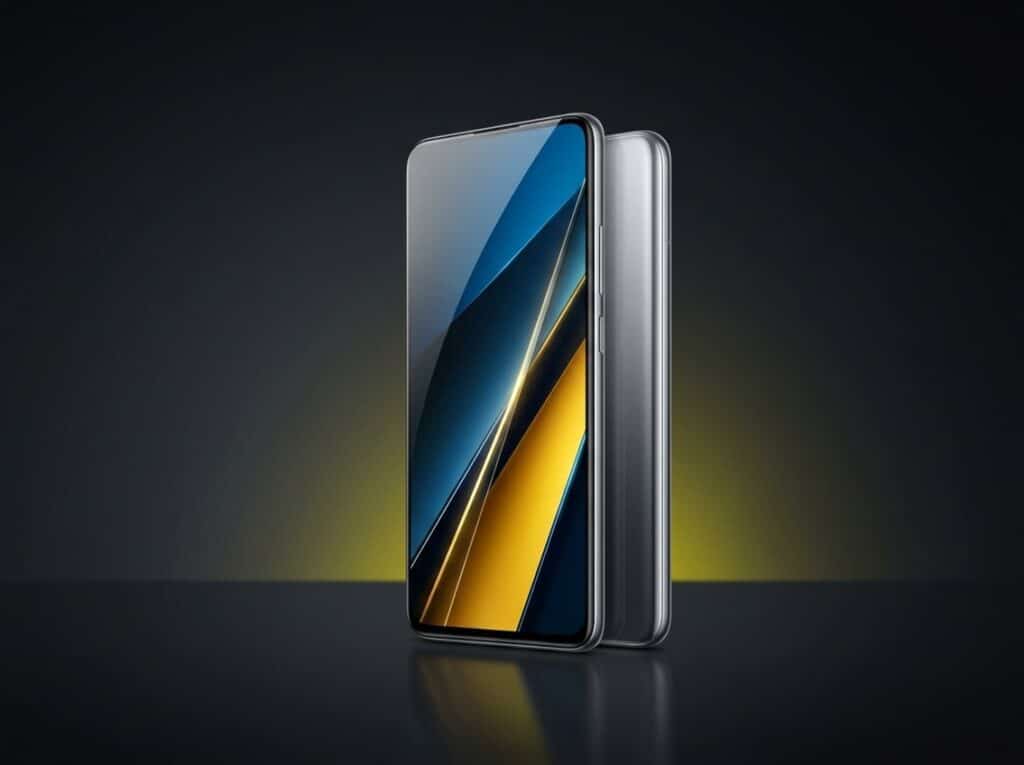
The POCO F9 Ultra landed in Singapore on September 1, 2026, priced at S$1,199, or S$250 more than last year’s F8 Ultra. That’s a real jump, so it’s worth asking whether that extra cash actually gets you something useful. The bigger battery (8,050mAh) and Bose subwoofer hint at a phone built to last longer and sound better, not just cost less. Whether it’s worth the money really comes down to how it holds up day to day.
This review covers battery life, the new 2.1 audio system, and the three storage variants you can pick up on mi.com/sg and Shopee.
POCO F9 Ultra Singapore Launch Details and Pricing Structure in Singapore
The POCO F9 Ultra hit shelves in Singapore on September 1, 2026. You can grab it directly from Xiaomi’s Singapore website, or at official POCO stores on Shopee and Lazada. Physical retailers still carry it too, but right now online stores are your best bet if you want to check multiple storage options without waiting around.
September 2026 release and retail availability
This one launched as a premium phone, not a budget option. Unlike some of the earlier releases that relied on flash sales to clear stock, this one’s sitting steady on most major e-commerce sites right now. Worth checking mi.com/sg directly for any launch bundles, they might throw in a protective case or screen protector.
Price hike compared with the POCO F8 Ultra
The base model starts at S$1,199, up S$250 from the POCO F8 Ultra’s original S$949 launch price. That extra money covers better audio hardware and a bigger battery, but it also means you’re paying closer to what flagships charge these days. If you’re used to POCO’s usual price point, those multimedia upgrades might be worth thinking about before you pull the trigger.
Storage variants and official purchase channels
You’ve got three options to choose from here.
- That’s S$1,199 for 12GB RAM and 256GB storage.
- S$1,399 for 16GB RAM + 512GB storage
- S$1,699 for 16GB RAM + 1TB storage
If you’ve got a big media library on your phone, the 1TB model is worth looking at. Every version runs on eSIM and supports two profiles at once, so travelers or anyone running two lines doesn’t have to swap physical SIM cards.
POCO F9 Ultra Singapore Display Technology and Visual Performance
That 185Hz refresh rate isn’t just a number on a spec sheet. Scrolling through dense social feeds or switching between demanding apps feels genuinely snappy, and it makes older mid-range phones look sluggish by comparison. It’s real value, but you do need to know when the display actually gets to work at that speed.
185Hz AMOLED panel specifications
Xiaomi’s gone past the usual 120Hz limit here, pushing it up to 185Hz for supported content. That extra speed cuts down on motion blur in fast-paced games and when you’re scrolling quickly. Colors hold up at this pace too, so you don’t get that washed-out look you sometimes see on cheaper high-refresh panels.
The AMOLED panel also delivers deep blacks and strong contrast. Text stays sharp against dark backgrounds, which makes night-time reading easier on the eyes. The touch sampling rate matches the display speed well, so inputs register without any noticeable lag.
HDR brightness limitations and real-world usage
Sure, marketing materials like to tout a peak brightness of 10,000 nits, but that’s under pretty narrow circumstances. It only kicks in during HDR video playback, and it only covers 1% of the screen at a time. Normal UI navigation or scrolling through a website won’t hit that number.
- How well you can see your screen outside comes down to how bright it actually gets.
- It reads fine in sunlight, though not quite up to the peak brightness advertised.
POCO F9 Ultra At a glance
| Purchase Channel | What to Expect |
|---|---|
| Xiaomi Singapore Official Website (mi.com/sg) | The most reliable source for launch bundles, which may include a protective case or screen protector alongside the device. |
| Official POCO Stores on Shopee and Lazada | Currently holds the most consistent stock across all three storage variants, avoiding the flash-sale scarcity of earlier releases. |
| Physical Retailers (Mobile Department) | You will find the phone in the Mobile section, though stock consistency for specific high-capacity models tends to lag behind online platforms. |
Audio Quality and Battery Endurance
The 8,050mAh battery gets all the attention, but the audio setup is what really catches you off guard. Most flagship phones skip the dedicated subwoofer just to save a little space, so it’s surprising that POCO managed to fit a Bose-tuned 2.1 system into this chassis.
Bose subwoofer integration in 2.1 audio system
This isn’t just a software fix. A separate subwoofer driver handles low frequencies on its own, apart from the main stereo speakers. That’s what gives movie soundtracks and gaming effects their real depth, something standard phone speakers just can’t match.
The bass holds up even at max volume, so you don’t get that muddiness you see in other headphones. That makes it easy to just leave your phone on and listen outside without needing Bluetooth dongles everywhere.
8,050mAh capacity and two-day battery life
Just because a phone has a big battery doesn’t mean it’ll actually last all day. Here, though, capacity actually does what it’s supposed to. Moderate users can count on two full days on a single charge. And even heavy gamers usually have at least 20% left by bedtime.
- Scrolling through social media or watching videos uses way less power on this generation compared to the last one.
- It draws almost no power sitting idle, so you can keep it charged overnight without turning on airplane mode first.
- That big battery is what keeps things running smoothly, even with the high-refresh-rate display sucking up so much power.
100W wired and 50W wireless charging speeds
Filling up such a big battery takes real power behind it. The included 100W HyperCharge adapter gets you from zero to full in under 30 minutes. Even wireless charging runs at 50W, so you get wired-like speeds without any cables tangled up on your desk.
Design Compromises and Hardware Trade-offs
The thing weighs around 235g to 238g, so you notice it the second you lift it. That’s not nothing, and it doesn’t get any easier the longer you’re using it.
Heavy build and bulkiness concerns
- You’ll notice fatigue kicking in faster once you hit those long gaming sessions or video calls.
- That big camera module shifts the phone’s center of gravity way up top.
IP68 water resistance limits and box contents
Xiaomi lists the phone with an IP68 rating, but that doesn’t mean you can just toss it in deep water and walk away. It’s only good for submersion up to 1.5 meters for 30 minutes. That’s standard enough, but if the phone slips below 1.5 meters, don’t count on it surviving.
There’s no power adapter in the retail box either, so you’ll have to pick up a compatible 100W charger on your own if you want the phone to charge at full speed. That adds to the upfront cost.
Processor gains over the previous generation
The benchmark scores look better on paper, sure, but honestly the day-to-day difference isn’t that big compared to the POCO F8 Ultra. Scrolling through social media and switching between apps still feels about the same either way.
- Frame rates stay steady while gaming, but this bump isn’t going to change anyone’s opinion overnight.
- RAM matters way more for multitasking than raw CPU power does.
- Thermal management still handles sustained loads about the same way it did on the last generation.
The upgrade feels more incremental than transformative. If you’re not pushing the hardware to its limits on a regular basis, that bump in performance probably won’t justify paying a hefty premium over last year’s model.
Connectivity Features and Setup Requirements
You don’t need to mess with a physical SIM tray here. This thing runs two eSIM profiles at once, so if you’re traveling or just juggling multiple lines, you can keep your local data plan running alongside your home number without ever swapping cards.
Dual eSIM support capabilities
- Store multiple carrier profiles if you’re covering different regions or working across separate accounts.
- Keep two lines active for simultaneous calls and data usage.
- Be careful not to damage or lose your physical SIM card when swapping phones.
If you’re flying a lot, this means less hassle when you land and need local data. Just scan the carrier’s QR code, and you’re set up, no trip to an airport store required.
Standard smartphone installation process
When you turn it on, you get the usual Android setup wizard. One thing worth knowing: the retail box skips the power adapter entirely, so if you want fast charging, you’ll need a 100W HyperCharge-compatible brick already sitting around. Stick with a generic charger and you’ll notice the phone takes much longer to top off.
- If you want full-speed wired charging, go with a 100W+ adapter.
- Plug in with a 50W wireless charging pad for easy top-ups.
- The IP68 rating means it’s good for accidental splashes or going underwater up to 1.5 meters deep.
Migrating your data is simple enough over a cable or from a cloud backup, but the phone’s hefty weight makes it tough to set up one-handed. And if you’re charging wirelessly, stick with something that puts out real wattage, otherwise that full charge could take way longer than you expect.
FAQ
Does the box include a charger?
Nope, the power adapter’s not in the retail box. You’ll either need to use an existing compatible charger you already have, or you’ll have to pick one up separately if you want to use the 100W wired HyperCharge or the 50W wireless charging.
How heavy is the device in hand?
This phone tips the scales at around 235g to 238g, so it feels heavier and bulkier than most phones. A lot of that comes from the huge 8,050mAh battery, so don’t expect it to sit lightly in your pocket like a typical mid-range device would.
Is the screen always that bright?
That 10,000 nit peak brightness only happens when you’re playing HDR video and zoomed into just 1% of the screen. For everyday stuff like browsing or reading text, you’ll get much lower brightness. Don’t count on hitting those extremes across the whole screen when you’re actually using it day to day.
What are the water resistance limits?
IP68 means it can handle being submerged up to 1.5 meters for up to 30 minutes. That’s really just protection against accidental drops into shallow water, not swimming or anything deeper than a couple of feet. Think of it as emergency coverage, not a sign that it’s pool-safe.
Conclusion POCO F9 Ultra Singapore
If battery life and audio quality matter more to you than price, the POCO F9 Ultra’s worth a look. But at S$1,199, it’s worth taking a hard look at your budget first. Check mi.com/sg for active launch bundles before you buy.
Table of Contents