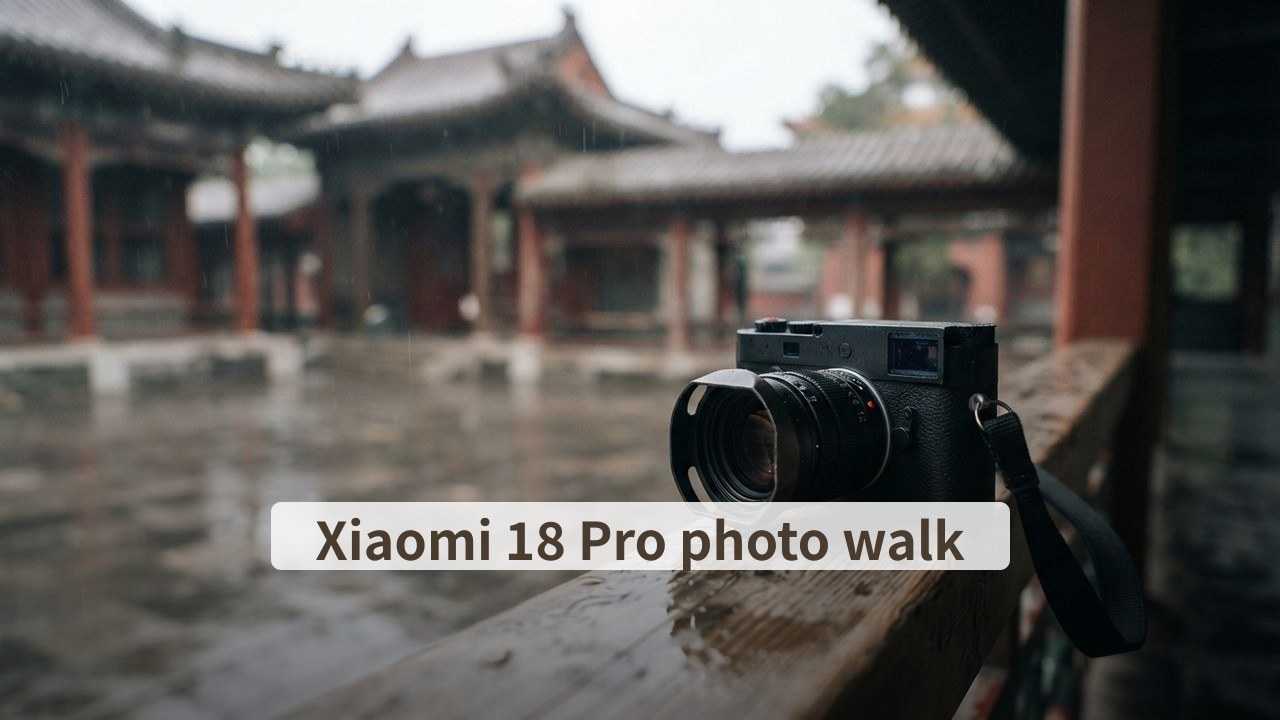
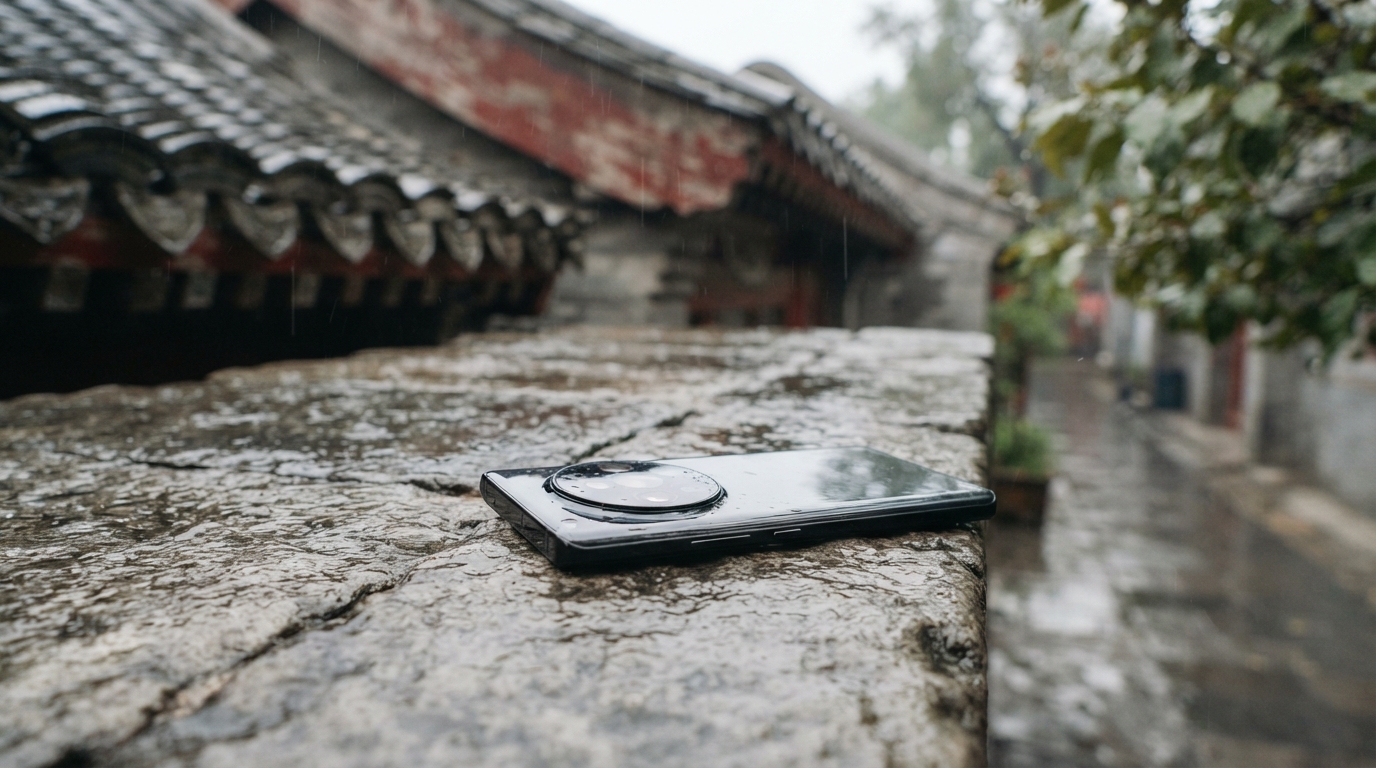
Beijing rain turns the streets into a grey, reflective mess that usually wrecks a phone camera’s color balance. Xiaomi’s 18 Pro, released on September 23, 2026, handles this lighting better than most flagships because its flat rear panel stops water from pooling around the lenses. A flush camera design might look like a cosmetic tweak that sacrifices grip, but it changes how the device behaves in wet weather.
The updated layout alters how the phone sits in your palm, affecting both one-handed use and overall stability. Under heavy cloud cover, the dual 200MP Leica system adjusts noise processing to keep detail in low contrast scenes, while specific shutter speed settings help keep exposure steady as light changes between showers.
The Xiaomi 18 Pro’s flat camera housing and 200MP Leica sensors handle Beijing’s rain without colors bleeding or water pooling on the lenses. It works well for low-light street shots, though you’ll need to adjust the shutter speed manually if you want to freeze falling raindrops without introducing camera shake.
Capturing Beijing in the Rain with the Xiaomi 18 Pro
The Xiaomi 18 Pro changes the rear panel layout in a way that affects how the phone feels to hold when it gets wet, moving away from the large protruding camera islands seen on older flagships.
The shift to a flush camera design
Older models had raised lens modules that collected water and felt lopsided in your palm. The 18 Pro uses a flat back, keeping the camera glass level with the outer frame.
- The phone rests flat on wet surfaces without tipping.
- The back is easier to grip during long shooting sessions.
Handling low-light and wet conditions
Beijing rain creates a thick grey haze that washes out color. The sensor has to pull detail out of dim light without creating digital noise. The 200MP Leica system handles this light range well, though much of the final look comes down to how fast the image processor works.
Wet weather also tests the seals. The flat camera panel leaves fewer gaps for water to seep into, though sudden temperature changes can still cause fogging inside the glass.
Leica optics in challenging weather
Leica processing sticks to natural colors rather than boosting saturation. In dark, rainy weather, this keeps grey skies and wet streets looking accurate instead of overly bright. The glass maintains decent contrast when thick cloud cover softens the light.
Capturing rain drops comes down to shutter speed choice. Fast shutter speeds freeze the water but need more available light, while slower speeds show motion blur but risk camera shake from hand movement. The camera app gives you manual control over these settings, which helps when the light shifts every few minutes.
At a glance
| Camera Module | Key Specs | Best For |
|---|---|---|
| Main Camera | 200MP sensor, Leica optics | Wide shots in dim, rainy light |
| Periscope Telephoto | 200MP sensor, Leica optics | Long-range details without losing clarity |
How the 200MP Leica Imaging System Performs
The rear camera array on the Xiaomi 18 Pro packs a dual 200MP setup, a configuration that demands serious computational horsepower to process in real-time. Moving to two high-resolution sensors means both the primary wide and periscope telephoto channels feed massive amounts of data directly into the image pipeline.
Dual 200MP sensor capabilities
Having two 200-megapixel sensors changes how you frame shots. Instead of relying on digital crop for mid-range magnification, the system switches between the main and periscope telephoto lenses while retaining high resolution across both focal lengths.
- Full-resolution capture at 200MP preserves detail for heavy post-processing crops.
- Low-light performance benefits from the larger pixel binning patterns typical of Leica-tuned optics.
Periscope zoom performance in mist
Rain introduces atmospheric haze and moisture on the lens element. The periscope module struggles with contrast in dense fog because light scatters before hitting the sensor. The optical design still maintains decent edge definition on distant subjects, like street signs or building facades across a wet intersection.
Details look softer than they do in clear weather, but images stay usable for documentation even if they lack punch for artistic shot-making.
Processing power of the Snapdragon 8 Elite Gen 6
The 2nm Snapdragon 8 Elite Gen 6 chip handles the load of merging data from two high-resolution sensors, running multi-frame stacking and noise reduction without lag during capture. Even in low visibility, the final image stays stable without motion artifacts from hand tremors in damp conditions.
What It Is Like to Use in the Field
Carrying a dual 200MP camera system through a downpour changes how you manage battery life and the software interface during extended walkarounds.
Battery endurance during long photo walks
High-resolution shooting in low light drains energy faster than standard idle use. Fortunately, the 7,000 mAh Jinshajiang silicon-carbon battery in the standard Pro provides enough reserve capacity to absorb intense camera usage without dying mid-walk. The processor handles heat from the imaging hardware well enough, but continuous sensor readouts will still consume power noticeably faster than basic web browsing.
Navigating HyperOS 4 on an imported unit
Using a Chinese-market device in overseas markets comes with software quirks. Global services do not always sync automatically, so expect to configure account permissions manually. HyperOS itself runs smoothly, though backing up photos to international cloud storage takes a few extra steps.
Using the rear display for creative framing
The secondary screen takes the guessing out of selfies and group shots. You can check focus and exposure before taking the shot instead of relying on timers or guesswork. In the rain, when holding a phone steady at arm’s length gets tricky, a point worth remembering when juggling wet gear, seeing the frame on the back panel makes odd angles much easier to manage.
What to Watch Out For
Three practical friction points can dampen the experience, none of which show up in a studio spec sheet.
Lens condensation in high humidity
Beijing autumn rain brings humidity that sits just below the dew point. Moving from a cold street into a warm indoor space can put moisture on the lens glass within minutes.
- Rain droplets on the outside wipe off easily, but internal condensation takes time to clear.
- Frequent moves between sheltered walkways and open streets make this happen more often.
Chinese ROM limitations
Because the phone currently ships with software tailored for mainland China, Google Mobile Services are missing out of the box.
- Some system features rely on Chinese cloud accounts that require local phone numbers to verify.
- The interface language defaults to Simplified Chinese, so you need to change the settings before doing much else.
Network and Android Auto issues
Android Auto also does not work on the Chinese ROM because GMS is missing natively. Workarounds like Bluetooth profiles or third-party dashboards lack full integration and tend to break after system updates. If you rely on Android Auto for navigation or media control while driving, no software tweak completely fixes this.
Check your car head unit requirements before importing if in-car connectivity matters to you.
FAQ
Does the flush camera design actually solve the condensation problem in high humidity?
Not entirely. As noted earlier when examining field conditions, the flat back stops water from pooling on the outside and makes the phone easier to hold, but rapid temperature changes can still fog up the glass. Users in rainy, humid climates report this issue regularly.
Eliminating the raised bump cuts down on external water collection, but it doesn’t stop internal or surface condensation. If you move between sudden temperature shifts, you’ll still have to wait for the lens to clear before taking a clear shot.
What is the official global launch date for the Xiaomi 18 Pro?
Xiaomi hasn’t set an official global release date. Following its China launch on September 23, 2026, the phone remains a regional exclusive. Rumors point to an international rollout between December 2026 and February 2027, though the company hasn’t confirmed those dates.
Can I use eSIM or Android Auto on a Chinese version of the phone?
No. Units built for the Chinese domestic market lack hardware and software support for both features. That creates a real headache if you count on eSIMs when traveling or depend on Android Auto for navigation in the car.
Anyone who needs those functions should wait for the international release, which traditionally includes them. Chinese imports are restricted to physical SIM cards and won’t connect to car dashboards natively.
What warranty coverage do I get if I buy an imported unit in Singapore?
If you pick one up from a parallel importer, check their specific repair and replacement policies first before committing.
Conclusion
The Xiaomi 18 Pro handles wet conditions fine on paper, but getting a good shot in a Beijing rainstorm still comes down to how fast you adjust the shutter speed when the light drops. If you’ve been shooting with these settings, leave a comment with the shutter speeds that worked best for you in the rain.